
One Of The Simplest Ways To Achieve Your Goals

I learned to use sheer will power at an early age to get results…not-so-surprise ending, it all came crashing down. I don’t recommend it, nor do scientists!
Did you know, a rat forced to run dies more quickly than a stagnant one?
Later in life I learned to practice gratitude…results include lots of happy recipients, and on my side, stronger relationships; more exercise; better sleep; healthier eating; a deeper meditation practice; and increased feelings of peace, love, joy, and meaning.
And this isn't just me; unless you’ve been living under a rock, you likely know this is all heavily backed by research!
In fact, just 2 weeks of jotting down and savoring 3 things a day you’re grateful for has positive effects in 12 months, including reduced depression and increased happiness…
I used to overlook the wisdom in the word “appreciate.” Many financial assets “appreciate” over time, becoming more valuable. Similarly, in appreciating others and yourself, all accrue value.
This is the opposite of criticizing, which as you’ve surely learned by now, rarely leads to any kind of lasting healthy change.
So why then, is this kind of change so hard?
Well, our brains evolved to favor (and nature selected) not rocking the boat, so we could live happily in-group as hunter-gatherers, how we’ve spent 95% of our time on Earth.
More specifically, brain reward pathways often don’t understand the big picture. So, we fall into old habits, doing things we know we “shouldn’t.” When we try to correct for this, many of us are hard on ourselves, erroneously putting self-control over self-care…further exacerbating the issue.
And the group bit is paramount. To put it in perspective, a serious violation of a community custom back in the caveman days could result in being banished from the tribe, an almost certain death sentence.
Working in our favor, one of the ways we’re built to live in community is how in the act of giving we receive oxytocin (the love drug), dopamine (for motivation and pleasure), and serotonin (the happy hormone). Similarly, dopamine and serotonin release when we express gratitude after someone gives. The result — a cycle of giving and thanks resulting in lots of pleasant feelings…and food/shelter procured and threats abated.
This is why we find more personal happiness when given money if we spend it on others vs. ourselves.
So how does this translate to modern times and getting up early to workout?
The trick is that our brain works the same way for self-giving-giving and self-gratitude!
Not only do we feel good when we give ourselves something nice, but we also feel happier when we practice gratitude, for others and ourselves, which encourages even more positive change!
All this is in-line with additional research which shows that awe — that feeling we get in front of things we don’t immediately understand — is the most helpful emotion to change perspective (and also beneficial in reducing inflammation in the body).
And writing about awe can induce it, in the way the brain re-experiences it.
Awe is so important for two reasons — (1) it helps us see that our difficulties aren’t the most important things, and (2) it increases our sense of connection to others (surrounding ourselves with people who share goals is another super effective way to build habits).
I think of gratitude like a mini form of awe.
So my recommendation for making that behavior change?
Pick only one habit to build at a time.
And if you don’t already have a regular gratitude practice, prioritize it!
If it’s #1, you can start today (because if not now, when!?) by placing a pretty/cool notebook by your bed. Before turning out the light to sleep each night, write down and replay in the mind a few unique things that happened that day and that you’re grateful for. Ultimately, bringing gratitude to yourself, especially remembering being appreciated, is super helpful. These don’t need to be “big” moments — maybe it was a smile you noticed after talking to a stranger. What’s important is taking some time to reflect on it. This marks it in the nervous system and begins gradual shifts towards preferring these things.
You can take a moment now to visualize yourself practicing gratitude to help seal it in. That’s beneficial in starting a goal. Once begun, depending on how things are going, it can be helpful to narrow the frame of focus into a concrete next step for the goal or widen it to consider the bigger picture.
And when progress slows, you might consider…what very real, unmet need do you have that not hitting your goal is meeting? How might you have an unconscious commitment to not achieving it? Once identified, what’s the smallest, easiest, most pleasant action step you can commit to regularly to meet that need?
Once again, all this is backed by evidence.
Maybe most importantly, set goals, and practice taking all action in life, out of love versus fear, moving towards something versus away from another.
You can set an intention to practice gratitude nightly, and don’t beat yourself up when you miss one — it’s totally fine, and there’s no need to make it up.
I typically recommend setting an intention for practicing a new habit daily and assuming you’ll miss one day a week. Ideal learning happens when we’re successful 85% of the time — less, and it’s too hard, more, too easy.
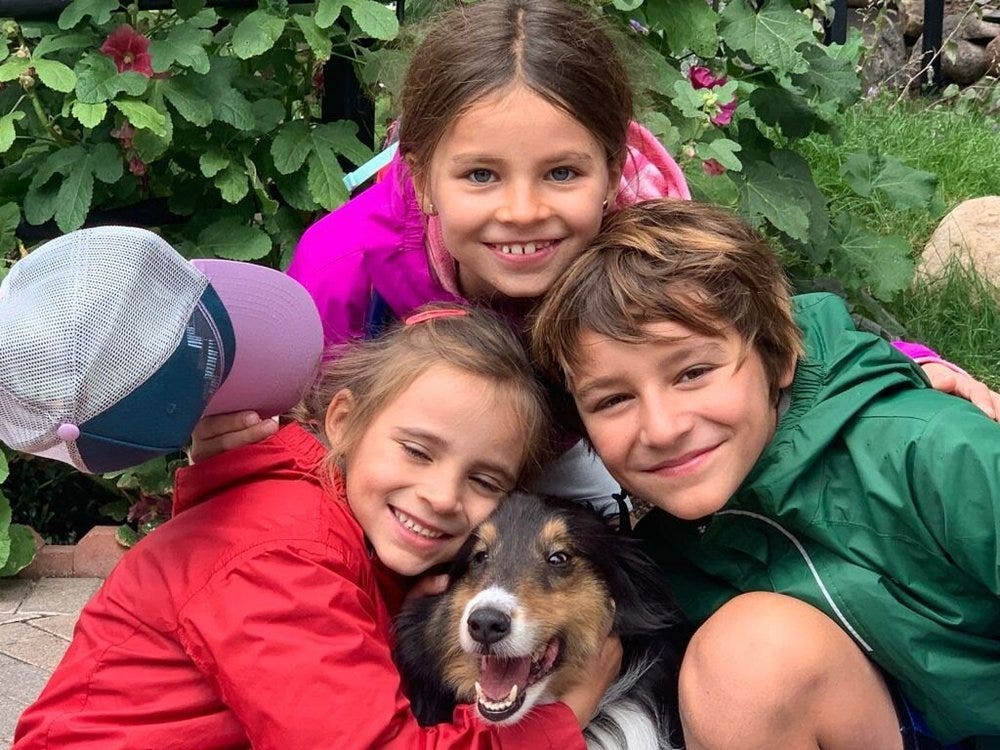
Need some inspiration? Go spend some quality time with kids — I was hanging out with some good friends and their family this summer in Colorado, and it felt like 80% of their kids’ emotions included gratitude (photo evidence, above). It was contagious.
After a month of practice, maybe you’ll notice a new habit around gratitude starting to form in your everyday life. Then, it’ll be time to keep that practice up, and maybe it’ll be just a little bit easier to start making small progress on that next goal!
Another related thing I like doing is keeping healthy snacks in the vehicle and bag for people in-need…
All this sound like too much work? Behavior change takes time, and it’s all about micro improvements — starting where you are vs. aiming to become a Marvel character tomorrow, identifying what’s in the way of change and appreciating it vs. forcing yourself to do it.
Notice how I’ve referred to “building” habits throughout this article? They’re not made and broken, as much as pop psychology would like you to believe; instead; we slowly bend behavior.
Trust me.
But more, science.
Okay, now that I’ve broken everything down in the micro, here’s a complimentary macro exercise I recommend. There are 2 steps:
1. Imagine in wildly vivid detail the exact future you most deeply yearn for...5 years from now. Dream big. Who is and isn't in your life? Where are you in the world? What's the weather like? What's your vocation? Do you notice any buildings, rooms, important objects? What are the colors, textures, sounds? What's each hour of the day look like for you on, say, a Tuesday? Most importantly, how do you feel?
I recommend doing this step in some down time when you're rested and grounded. You can close your eyes and visualize, draw, journal, talk into a video camera, all of the above. Spend at least an hour. Come back to it daily for a week or two. Don't try to think too hard. Ask the questions, and then get out of the way. Keep a notepad by your bed, by the shower, in your pocket on walks.
2. One you feel really solid on (1), start acting, making decisions, talking from this place. Right now.
The end.
You'll have your dream before you know it. I've suggested this to many people and done it myself, all of us with the same result. Our dream.
So, choose wisely.
I caution against including bank account balances or excessive material possessions in your dream, because, is that what you really want? If you think it is, do you believe you need a certain amount of money to achieve your dream? But are you sure? I'll take the under on that one! Just focus on what you want, not how you think you'll get it <- that's typically control talking, one of fear's favorite conspirators. You can just include something in your dream about living comfortably if you want. Or if you're still set on a number, maybe toss in world peace or stabilizing the climate, first 🙃!
Okay, that’s a wrap. I’ll leave you with a quote from psychologist Carl Rogers, “It wasn’t until I accepted myself just as I was, that I was free to change.”