
Talk around breathing. Don't breathe around talking.

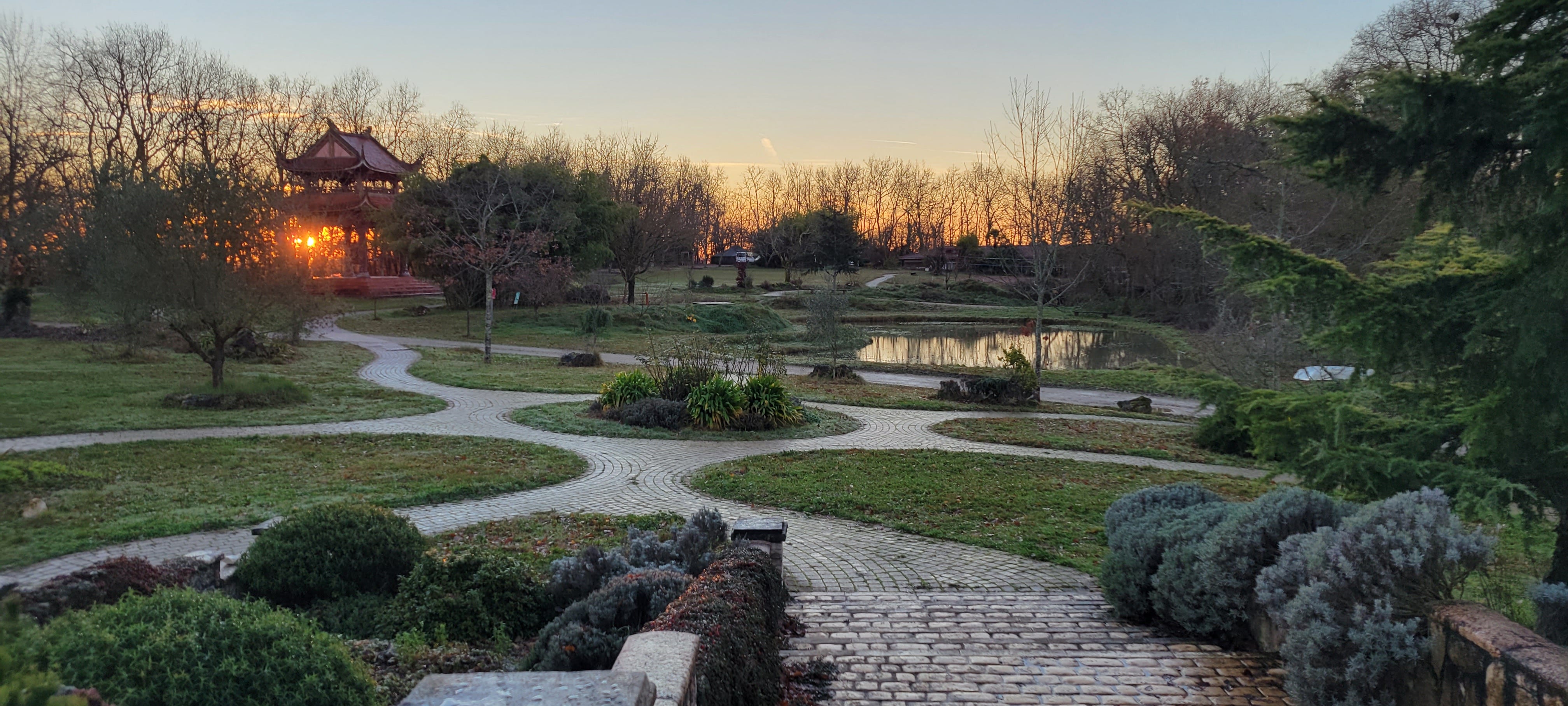
I spent a week at Plum Village in 2022 just before Thich Nhat Hanh passed away. While he wasn’t there in body, his presence was palpable. During the morning meditations on the deck of his hut, amidst the fog rising over the rolling lines of plum trees, in the sun rising over the Zen garden, throughout the woods during walking meditation.
At 7 am my first morning there, the retreatants were to congregate outside the kitchen to be assigned yogi jobs. I was walking across the grounds when the large bell in the center of the monestery rang, signaling the change of the hour. I stopped and closed my eyes. I breathed deeply.
Perhaps the most widely recognized practices across Thay’s worldwide network of monestaries is the one of stopping and enjoying the sound of the bell. Whether we’re walking, talking, cooking, eating...we stop. We listen. And we smile ☺️. It’s such a lovely interrupt. And this bell, it rings often! On the hour, on the half hour, to signal the beginning of an activity, to signal the end of an activity. With things happening throughout the day — meditations, meals, the work period, qigong practice, dharma talks, and so on — stopping is the norm.
As the sound of the bell merged with the quiet whistle of the birds, I resumed walking towards the kitchen. About twenty-five other yogis were already there, forming a wavy circle that swelled to include each new friend who arrived. We sang while we waited...
Happiness is here and now,
I have dropped my worries,
Nowhere to go, nothing to do,
No longer in a hurry.
Happiness is here and now,
I have dropped my worries,
Somewhere to go, Something to do,
But I don’t need to hurry.
I learned my job was to pick hot peppers in the garden after lunch.
The first half of lunch was enjoyed in silence. After the bell sounded, there was a period of mindful talking.
I found myself chatting with a thin, tall, pale-skinned monk, originally from Missouri. The bell sounded again as I spoke.
What a relief to stop and relax! I immediately noticed the tension engulfing my body, that just moments before was below the level of consciousness.
“It’s so nice having new friends here,” the monk commented as I remained in silence. It was the first week the monetary opened since the pandemic had begun. “It’s so easy for us to forget how precious the sound of the bell is.”
After our conversation and meal, I made my way to the garden where a young Vietnamese monk was picking peppers alone. I greeted the brother and introduced myself. He found a second basket and began to explain the work, making it clear that my priority, his priority, was mindfulness. Everything else came second.
Easy enough!
I began down the first row of shrubs, sensing my body as my right hand extended towards the base of the bright green chili, as its stem popped between my thumb and forefinger, as I placed it in the basket. I was working at a slightly slower pace than I might have otherwise. And it was pleasant. It was maybe the first truly peaceful experience of work I’d ever had. I’d thought these words were antonyms?
However, as the basket approached half full, the awareness...and peace...faded. I was nearly done with the third row when the bell rang. But this time, instead of stopping for it, I paused. My arm remained extended, waiting for the sound to end...so I could finish! Once it was out of the way, I sped up to pick the last bunch.
Then, out of nowhere, the monk appeared in front me, his posture, his smile, both gentle, and strong.
“Thank you, brother...” he extended his hands gracefully to receive my basket.
“Oh, I’m almost done,” I hurried ahead!
“It’s time for qigong, your work is done here. Thank you again. Go in peace.”
While my right arm felt a magnetic pull eminating from the dangling peppers at the end of the row, my heart swelled. My peace truly was more important. I choked up as I walked towards the meditation hall...
Early in our time together, most of my clients (and most high achievers I meet in general), hyperventilate as they talk. The subliminal modern instruction is, “work first, breathe later!” Come to think of it, I might have even heard that one growing up 🙃! So I'll interrupt, “heyyy, what’s happening in your body right now?”
“Ummm, I dunno?,” is the most common response. The mind has completely dissociated, sprinting forward at the speed of sound, whipping that begruged body that’s only holding it back.
“Were you breathing,” I ask?
“Oh. I guess not...”
It’s unfortunately common to hold the breath while talking and working these days. Screens exacerbate it. I call it work apnea.
“Would you be willing to try something? As you pickup where you left off, prioritize your breathing, not your talking. Talk around breathing instead of breathing around taking. Take all the time you need. I don’t care if there are pauses for minutes or if you finish the story at all. All I care is about is that you feel relaxed. Okay?”
I vividly remember the first time I said this to a client, a woman in her late thirties. The muscles in her face immediately softened as I spoke. She leaned back in her chair, closed her eyes. She literally didn’t open them or speak for the remainder of the session, about thirty-five more minutes. At the beginning of our next session, she started to tell me what was going on. As I noticed her body tighten, I remained silent and consciously relaxed. She stopped. She let her eyes close slowly, took a deep breath. As she resumed, her body completely at peace, she smiled.
When we’re doing this living thing right, we don’t need these epic rests from work — to collapse onto the couch and binge Netflix at the end of a long day, to have a glass of wine or six to take the edge off on the weekend, to veg out on the beach every summer until we forget it all. We can find a balance that’s sustainable, that’s actually nourishing.
If you take one thing away from this article, let it be this — your peace is more important than your work.
And work most especially includes the never-ending “to do” list we make for ourselves. Failing to understand, believe this is what Buddha calls delusion, the root of suffering.
Plum Village has a wonderful app where monastics guide meditations, and you can set a bell to randomly ring to help you remember to stop. Set it to sound throughout the day when the phone is on silent, and introduce the practice to your colleagues. They’ll thank you for it. And if they don’t, maybe find a new place to work!