
What Is Success?


David Brooks, bestselling author of The Second Mountain: The Quest for a Moral Life, expounds upon the lies our culture tells us:
The first lie is that career success is fullfilling. The second lie is self-sufficiency. The third lie is the lie of meritocracy. The message of the meritocracy is you are what you accomplish. The myth of the meritocracy is you can earn dignity by attaching yourself to prestigious brands. The emotion of the meritocracy is conditional love, you can “earn” your way to love. The anthropology of the meritocracy is you’re not a soul to be purified, you’re a set of skills to be maximized. And the evil of the meritocracy is that people who’ve achieved a little more than others are actually worth a little more than others.
Most people (subconsciously) believe a big success (raise, promotion, exit, etc.) will bring them happiness. Or that they’ll be happy when...
This could not be further from the truth.
The fallacy is that happiness will come from the long-sought financial freedom and the earned praise and respect of their feat.
The story most tell themselves is that they love building things, the challenge, etc.
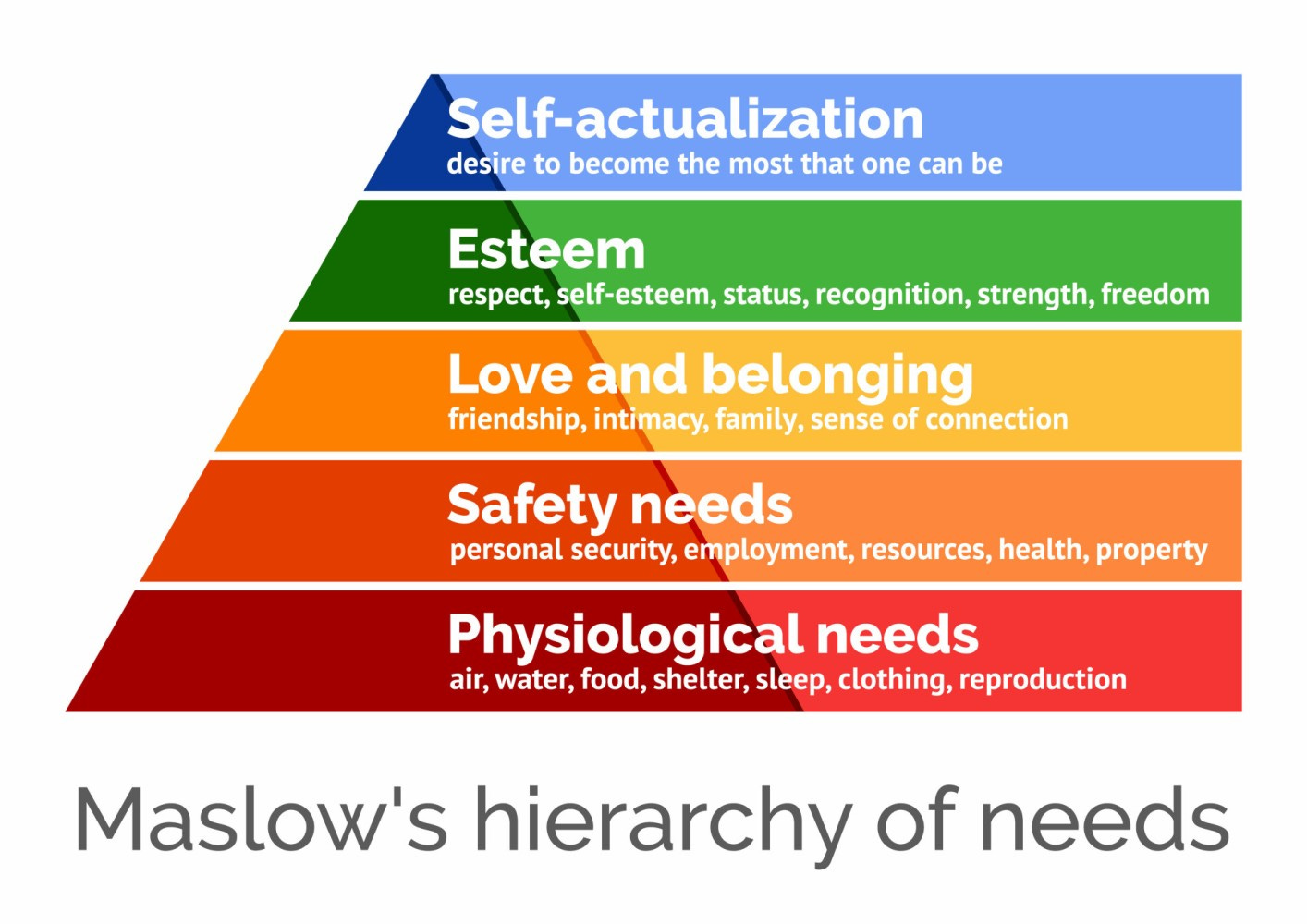
The reality is that this mindset is anchored in the low-level safety category of Maslow’s Hierarchy of Needs, motivated by deficiency, fear.
There is some level of happiness brought by some level of financial security.
Harvard Professor Arthur Brooks teaches leadership and happiness — he recently posted to this effect:
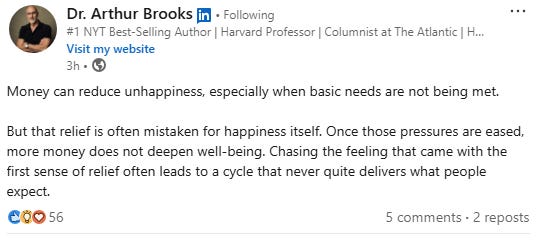
The reality is that most people reading this have long surpassed the mark of meeting their basic needs and are feeding their fear through their “success”.
I have met a number of people in this group who are first-generation immigrants or children thereof, where there were once (quite recently) very real physiological and safety needs. But are there, still? If you’re in this group, what is your parents’ deepest wish for you? Even if you were taught to work hard and earn lots of money, is their real goal not for you to be happy, free?
There is great strength in taking a step back and re-assessing, do I have enough to meet my basic needs? If you’re reading this, you probably do, and any motivator for you around money, worldly success is likely an echo of a past fear masquerading as growth. If you take an honest look, you may see that your motivations were rooted in a misconception around the vertical axis in Maslow’s Hierarchy being financial wealth. But it’s not! Take another look. The vertical axis is spiritual wealth, which often becomes inversely related to material wealth — this is why monks don’t have any possessions!
So really, what is success for you? If you haven’t recently done this exercise, I encourage you to set aside some time as an adult to contemplate this question. If you have a significant other, have a conversation with them. What are your values? What do you want your epitaph to read? Would it be your current LinkedIn headline? If not, how might you live more in alignment, today? We’re not going to live forever. And while you may “know” this, the idea that I’ll change later, be happy later, etc. is rooted in fear, denial of death. I practice living every day as if I knew I had five years left to live — enough that I still need to keep up my worldly responsibilities, not so much that I postpone things.
I recommend asking these questions, and then letting them sit. Don’t try to answer them, immediately. Ask the question when you wake, beholding nature, mid-meditation, in the shower, before sleep. Give it a week or two before you write anything down.
In the meantime, take a look at your calendar for the coming week. Delete anything you wouldn’t do if you knew you’d die in five years!
You won’t regret it 🙃